New-Energy Vehicle Quality Problems in China Stall, But Nearly 70% Are Design-Related, J.D. Power Finds
New Force Brands Achieve Dual Improvements in Quality and Design
SHANGHAI: 2 April 2026 – While the overall number of initial quality-related problems that new energy vehicle (NEV) owners experience continues to rise, the rate of growth has slowed. The overall average number of problems owners have experienced this year is 231 problems per 100 vehicles (PP100), an increase of 5 PP100 from 2025, according to the J.D. Power 2026 China New Energy Vehicle Initial Quality StudySM (NEV-IQS), released today. A lower number of problems indicates higher quality.
This study, first published in China in 2019, is based on the annual JD Power U.S. Initial Quality StudySM (IQS). The NEV-IQS measures new-vehicle quality by examining problems experienced by NEV owners in China within the first two to six months of ownership in two categories, design-related problems and defects/ malfunctions.
This year’s findings indicate that the industry-wide average stood at 231 PP100 in 2026, representing a slight increase of 5 PP100 from 2025. Although the overall number of quality problems continues to rise, the growth rate has slowed. Growth in defect/ malfunctions has dropped to 0%, while design-related problems account for nearly 70% of total problems.
“In 2026, the PP100 for NEV in China reached 231. The industry PP100 has maintained an overall upward trend over the past six years, though the growth rate has slowed down in the last two years,” said Sean Wang, managing director of automotive product solutions division, J.D. Power China. “From the factor perspective, driven by rapid advancements in battery technology, the proportion of charging-related problems has dropped significantly. In contrast, software-related problems have deteriorated markedly. Infotainment system problems and advanced driver assistance system problems account for 14.3% and 9.5% separately. Design-related problems represent as high as 70%. Therefore, optimizing the interactive experience and accuracy of intelligent functions has become a core priority in automotive quality management. In terms of consumer, post-95 buyers account for 41% of new vehicle purchasers in 2026。 The post-00 generation takes up 9%, tripling the figure recorded in 2024. However, the PP100 reported by post-00 users reached 259, which is 12% above the industry average. Their major complaints focus on three areas: smart experience, driving performance, and charging experience.”
Following are some key findings of the 2026 study:
Industry growth in quality problems slows: While overall industry quality problems continue to rise, the growth rate has fallen to its lowest level in recent years. Quality pain points are shifting sharply from traditional defects to experience-related issues. Design defects have become the leading quality concern, accounting for nearly 70% of problems this year and have risen for two consecutive years. Growth in malfunction problems has flattened to 0%, while the share of NEV-specific problems remains low, accounting for 9%.
Quality focus shifts: The infotainment category has the highest number of problems experienced for three consecutive years. The share of problems related to Advanced Driving Assistance System (ADAS) has increased year over year, while battery/charging-related problems have declined. Key ADAS pain points center on reverse parking assistance, with issues including frequent lens soiling; overly frequent alerts; and inaccurate performance. Cockpit experience is mixed: basic interaction issues such as unresponsive touchscreens and Bluetooth connectivity have become more prominent, while advanced functions like voice recognition and in-car navigation have improved significantly.
Post-00 consumer penetration triples in three years: Post-00 consumers (those born after 2000) have become the most promising growth opportunity in the NEV market, with significantly stronger purchasing power, looser budget constraints and greater willingness to pay for premium products. Their needs have shifted from basic entry-level requirements to quality and experience. Their vehicle-buying and usage behavior shows clear patterns: they make decisions early and rely on online research, prioritizing strong visual appeal in exterior and interior design; high-impact, distinctive styling is critical; they have higher expectations for overall vehicle value, demanding “no weak links” in performance, space and charging convenience—all rated significantly more important than the industry average; they travel with pets at a much higher rate than the broader market, making pet-friendly design an important growth lever for this group; they reject “low price, low experience” models, showing high rates of problems experienced and low satisfaction across the RMB 100,000–300,000 mid-to-low price range.
Highest-Ranked NEV Models
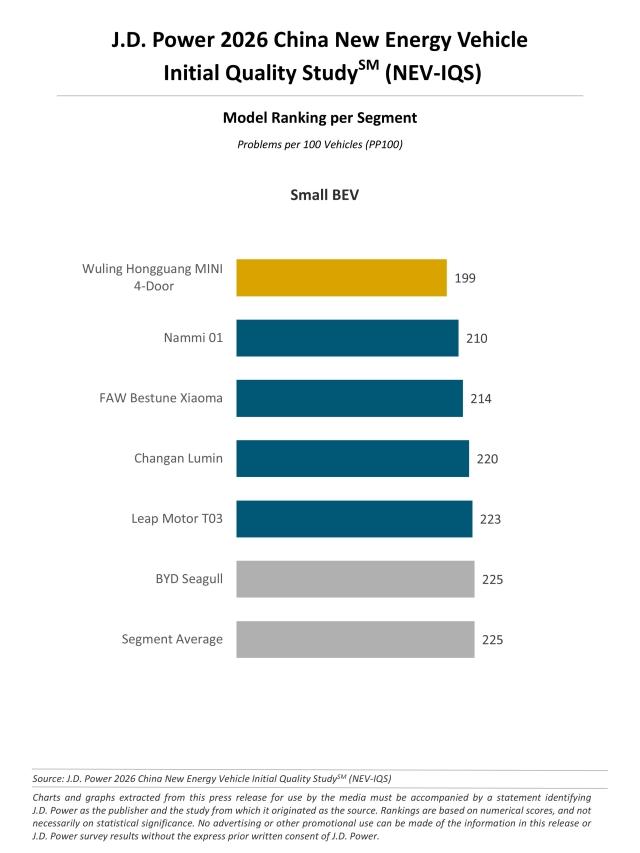
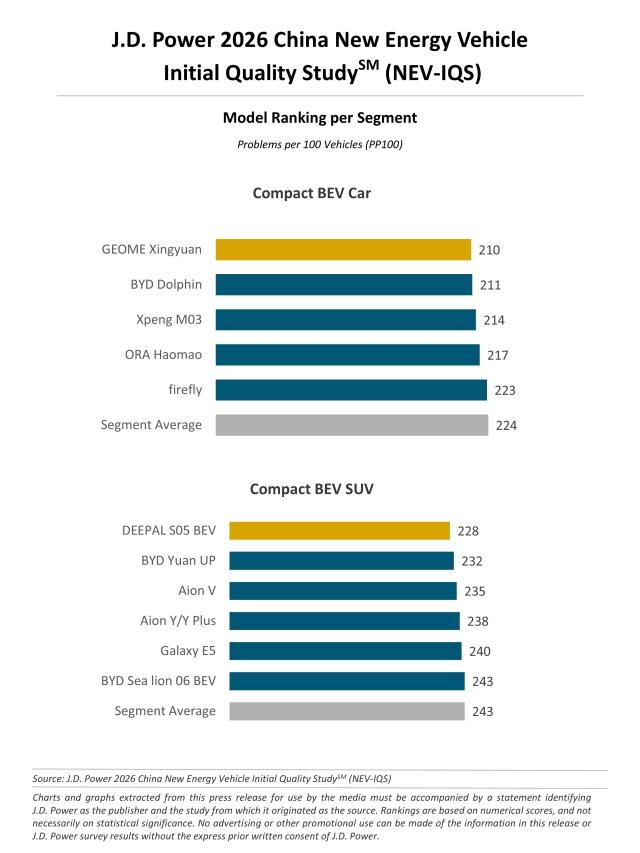
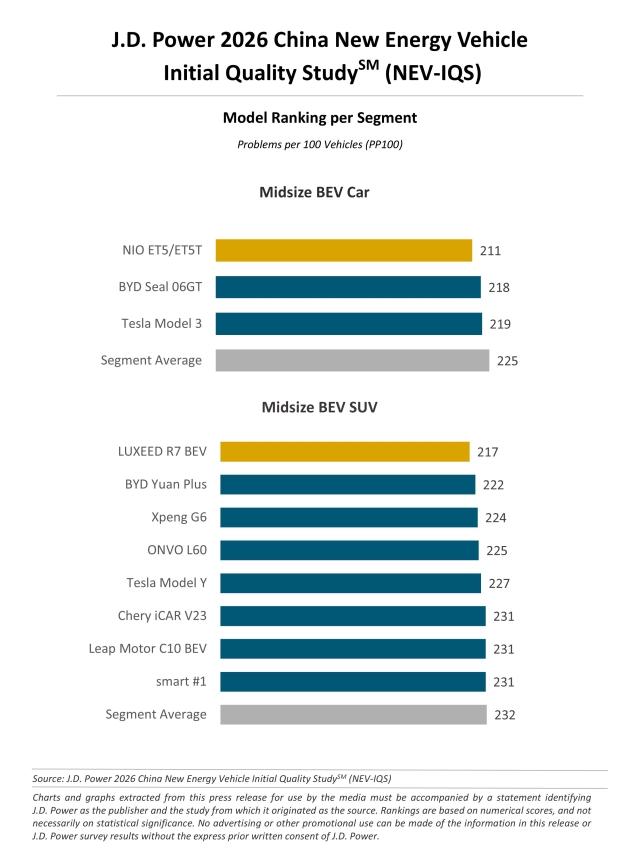
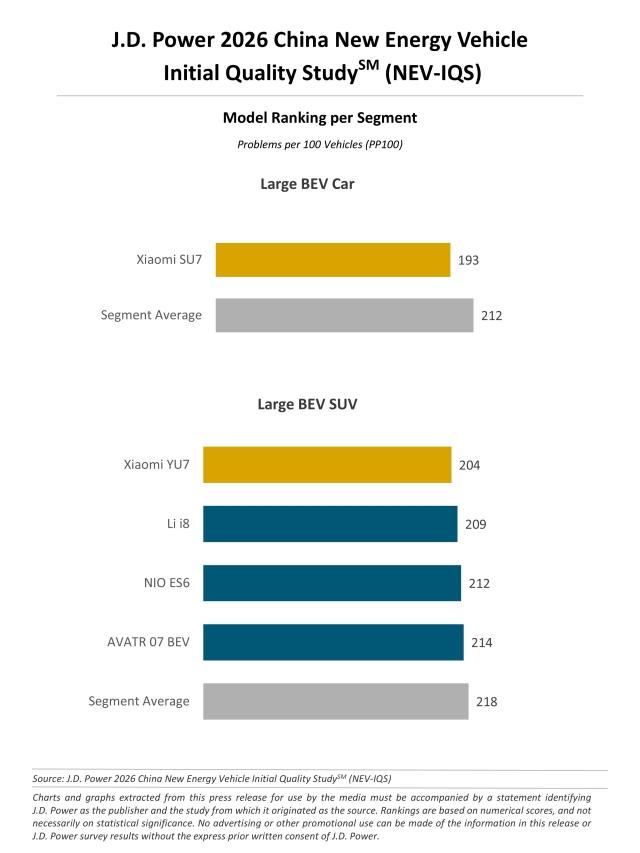
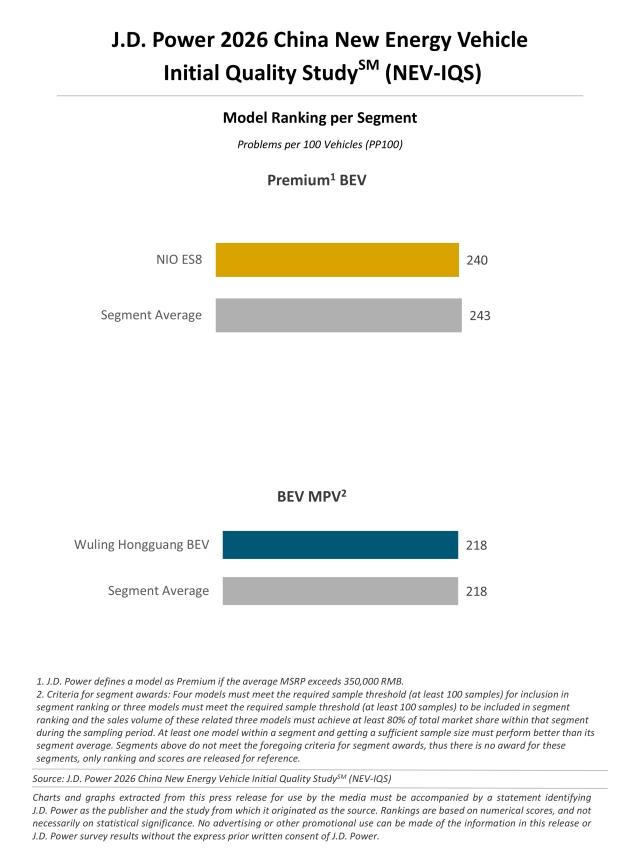
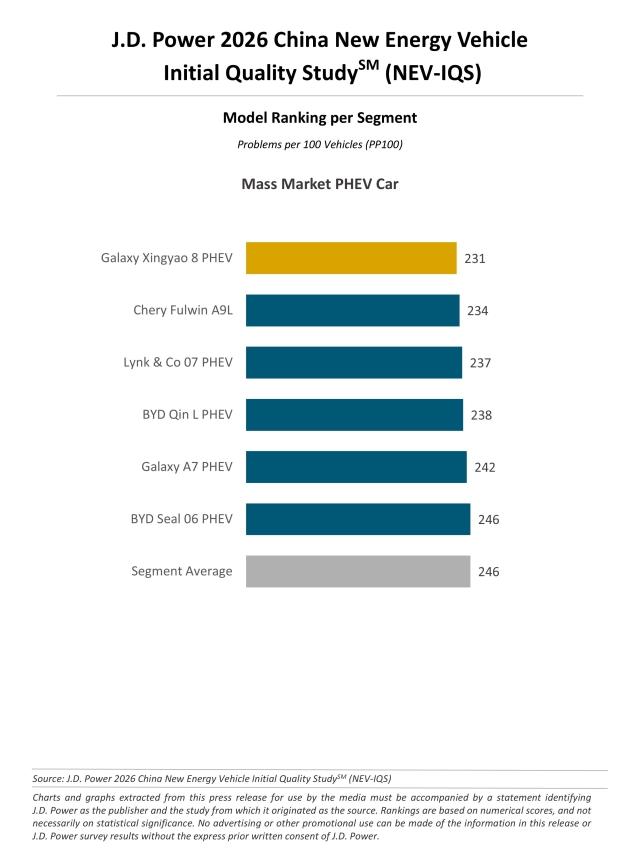
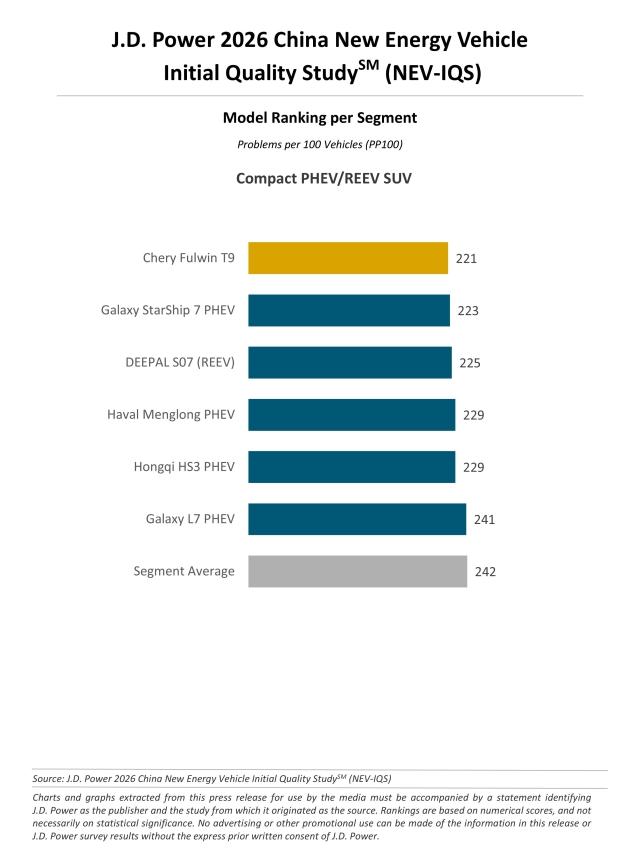
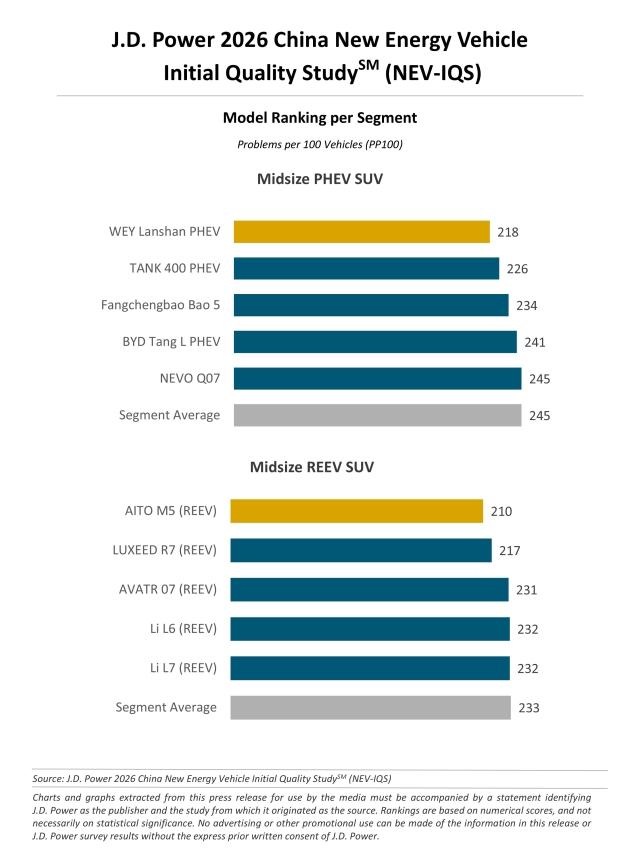
Models that rank highest in their respective segment are:
Small BEV: Wuling Hongguang MINI 4-Door
Compact BEV Car: GEOME Xingyuan
Compact BEV SUV: DEEPAL S05 BEV
Midsize BEV Car: NIO ET5/ET5T
Midsize BEV SUV: LUXEED R7 BEV
Large BEV Car: Xiaomi SU7
Large BEV SUV: Xiaomi YU7
Premium BEV: NIO ES8
Mass Market PHEV Car: Galaxy Xingyao 8 PHEV
Compact PHEV/REEV SUV: Chery Fulwin T9
Midsize PHEV SUV: WEY Lanshan PHEV
Midsize REEV SUV: AITO M5 (REEV)
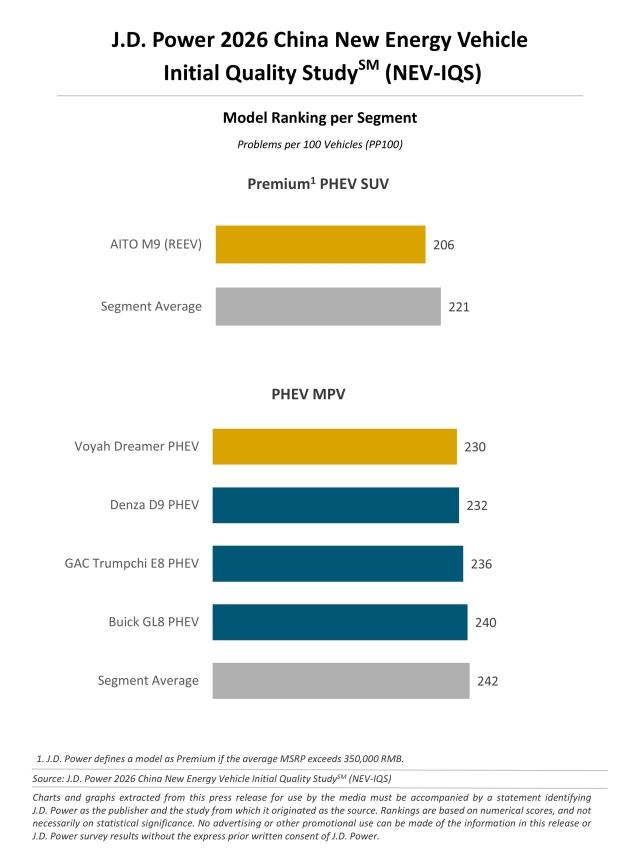
Premium PHEV SUV: AITO M9 (REEV)
PHEV MPV: Voyah Dreamer PHEV
The China New Energy Vehicle Initial Quality Study (NEV-IQS) measures new-vehicle quality by examining problems experienced by NEV owners in two segments: design-related problems and defects/ malfunctions. Specific diagnostic questions include 236 problem symptoms across 10 categories: features/ controls/ displays; exterior; interior; infotainment system; seats; driving experience; driving assistance; powertrain; battery/ charging; and climate.
The study this year is based on responses from 21,177 vehicle owners who purchased their NEV between May and December 2025. The study includes 137 models from 49 different brands, among which 129 models have sufficient samples. The study was fielded from November 2025 through February 2026 in 81 cities across China.
J.D. Power is a global leader in consumer insights, advisory services and data and analytics. Those capabilities enable J.D. Power to help its clients drive customer satisfaction, growth and profitability. Established in 1968, J.D. Power has offices serving North America, Asia Pacific and Europe. For more information, please visit china.jdpower.com or stay connected with us on J.D. Power WeChat and Weibo.
Media Relations Contacts
Wenjing Ji, J.D. Power; China; +86 21 8026 5719; wenjing.ji@jdpa.com
Joe LaMuraglia, J.D. Power; USA; 001-714-621-6224; media.relations@jdpa.com
About J.D. Power and Advertising/Promotional Rules www.jdpower.com/business/about-us/press-release-info